Welcome! Hoya (Tropical Plant) Site / Orchid Site / $=CAD, Accept Credit Card and E-Transfer
Next cutoff date: Mar 2nd

FAQ  Imported Orchids  Dicount  Pickup  Delivery  Shipping  Events  Policy Terms
CART    Membership  Login


New Released  Phal.(86)  Onc.(51)  C.(297)  Den.(110)  V.(34)  Cym.(70)  Paph.(0)  Others(150)  In Stock(211)  Supplies  SALE(0)


Welcome to visit! Hoya (Tropical Plant) Site / Orchid Site / $=CAD, We accept Credit Card and Email transfer
Next cutoff date: Mar 2nd

FAQ  Imported Orchids  Dicount  Pickup  Delivery  Shipping  Events  Policy Terms
CART    Membership  Login

New Released  Phal.(86)  Onc.(51)  C.(297)  Den.(110)  V.(34)  Cym.(70)  Paph.(0)  Others(150)  In Stock(211)  Supplies  SALE(0)


Welcome to visit! Hoya (Tropical Plant) Site / Orchid Site / $=CAD, We accept Credit Card and Email transfer
Next cutoff date: Mar 2nd

FAQ  Imported Orchids  Dicount  Pickup  Delivery  Shipping  Events  Policy Terms
CART    Membership  Login

New Released  Phal.(86)  Onc.(51)  C.(297)  Den.(110)  V.(34)  Cym.(70)  Paph.(0)  Others(150)  In Stock(211)  Supplies  SALE(0)


Imported Orchids  Instructions and Care Advice

At MagicOasis, we are committed to providing customers with high-quality orchids and exceptional service. We are grateful for the positive feedback we have received regarding our plants and services, and we continuously work to improve every aspect of the purchasing process.

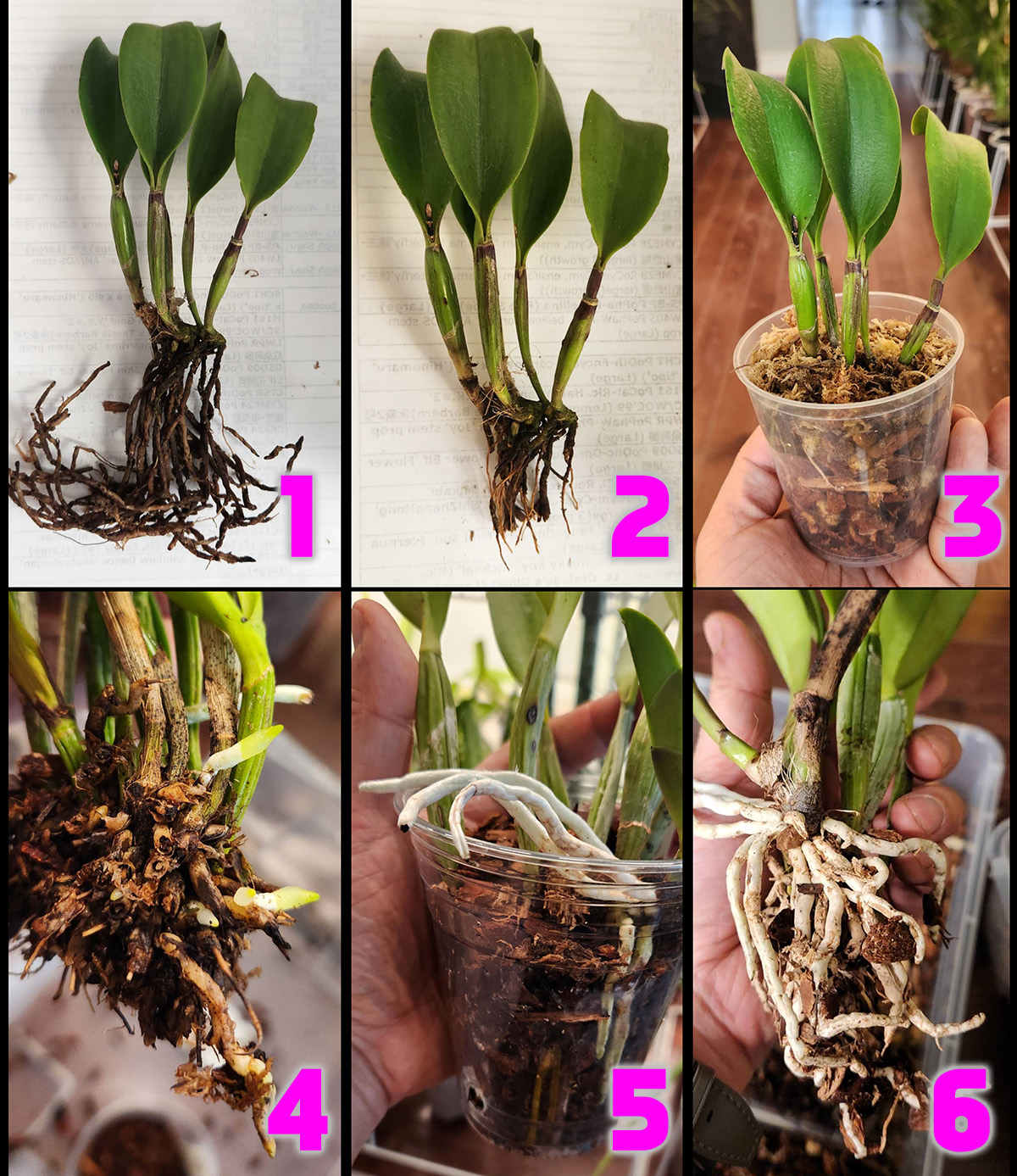
Our business is primarily based on pre-orders of imported orchids. Due to the strict regulations imposed by the Canadian Food Inspection Agency (CFIA), all imported plants must have their original growing media removed and enter Canada as bare-root plants. We strictly adhere to these regulations, even though it may temporarily affect the condition of the plants. By understanding these requirements, customers can make informed decisions and feel confident in caring for their new orchids.

In orchid cultivation worldwide, most plants are grown in media such as sphagnum moss, except for a small number of bare-root cultures. During export, removing the original media can damage the root system and create new wounds, which may increase the risk of infection. Although we use air freight and carefully control shipping times (typically within 24-36 hours, with plants packaged within 5 days), certain orchid types—such as Phalaenopsis, Cattleya, and other sensitive varieties-may experience some root damage during transport.

Fortunately, orchids are resilient plants. Even when some roots are damaged, they can adapt to their new environment and generate new healthy roots with proper care.

For newly imported orchids with delicate or limited root systems, we recommend the following care steps:

  1. Trim damaged roots - Remove any broken or decayed roots and allow the remaining roots to dry for a short period to promote wound healing.

  2. Plant in moist but well-draining media - Place the orchid in suitable growing material and keep the surface lightly moist by misting once or twice daily.

  3. Monitor and support new growth - Most orchids will quickly develop new roots when provided with the right conditions and care.

Following these guidelines will help your imported orchids recover and thrive in their new home.


At the same time, we would like to highlight a few important points:

  1. Understand the nature of imported pre-order plants - Please familiarize yourself with the characteristics of imported orchids and have a basic understanding of orchid care to properly care for newly arrived plants.

  2. Expectations for root systems - If you require perfect plants, such as the flawless Phalaenopsis typically found in supermarkets, please note that newly imported plants may not meet this standard. For all imported Phalaenopsis, some root breakage is unavoidable due to the removal of the original sphagnum moss at the orchid gardens.

  3. Experience matters for small plants - If you are not very experienced, we do not recommend ordering Small Size Phalaenopsis, as handling these delicate plants may result in damage or loss.

  4. Consider our stock orchids - For less experienced growers, we recommend selecting from our stock orchids, many of which have already developed healthy new root systems here.

We always welcome your suggestions and feedback. Thank you for your understanding and support.


Imported Orchids  Instructions and Care Advice

At MagicOasis, we are committed to providing customers with high-quality orchids and exceptional service. We are grateful for the positive feedback we have received regarding our plants and services, and we continuously work to improve every aspect of the purchasing process.

Our business is primarily based on pre-orders of imported orchids. Due to the strict regulations imposed by the Canadian Food Inspection Agency (CFIA), all imported plants must have their original growing media removed and enter Canada as bare-root plants. We strictly adhere to these regulations, even though it may temporarily affect the condition of the plants. By understanding these requirements, customers can make informed decisions and feel confident in caring for their new orchids.

In orchid cultivation worldwide, most plants are grown in media such as sphagnum moss, except for a small number of bare-root cultures. During export, removing the original media can damage the root system and create new wounds, which may increase the risk of infection. Although we use air freight and carefully control shipping times (typically within 24-36 hours, with plants packaged within 5 days), certain orchid types—such as Phalaenopsis, Cattleya, and other sensitive varieties-may experience some root damage during transport.

Fortunately, orchids are resilient plants. Even when some roots are damaged, they can adapt to their new environment and generate new healthy roots with proper care.

For newly imported orchids with delicate or limited root systems, we recommend the following care steps:

  1. Trim damaged roots - Remove any broken or decayed roots and allow the remaining roots to dry for a short period to promote wound healing.

  2. Plant in moist but well-draining media - Place the orchid in suitable growing material and keep the surface lightly moist by misting once or twice daily.

  3. Monitor and support new growth - Most orchids will quickly develop new roots when provided with the right conditions and care.

Following these guidelines will help your imported orchids recover and thrive in their new home.


At the same time, we would like to highlight a few important points:

  1. Understand the nature of imported pre-order plants - Please familiarize yourself with the characteristics of imported orchids and have a basic understanding of orchid care to properly care for newly arrived plants.

  2. Expectations for root systems - If you require perfect plants, such as the flawless Phalaenopsis typically found in supermarkets, please note that newly imported plants may not meet this standard. For all imported Phalaenopsis, some root breakage is unavoidable due to the removal of the original sphagnum moss at the orchid gardens.

  3. Experience matters for small plants - If you are not very experienced, we do not recommend ordering Small Size Phalaenopsis, as handling these delicate plants may result in damage or loss.

  4. Consider our stock orchids - For less experienced growers, we recommend selecting from our stock orchids, many of which have already developed healthy new root systems here.

We always welcome your suggestions and feedback. Thank you for your understanding and support.

Imported Orchids  Instructions and Care Advice

At MagicOasis, we are committed to providing customers with high-quality orchids and exceptional service. We are grateful for the positive feedback we have received regarding our plants and services, and we continuously work to improve every aspect of the purchasing process.

Our business is primarily based on pre-orders of imported orchids. Due to the strict regulations imposed by the Canadian Food Inspection Agency (CFIA), all imported plants must have their original growing media removed and enter Canada as bare-root plants. We strictly adhere to these regulations, even though it may temporarily affect the condition of the plants. By understanding these requirements, customers can make informed decisions and feel confident in caring for their new orchids.

In orchid cultivation worldwide, most plants are grown in media such as sphagnum moss, except for a small number of bare-root cultures. During export, removing the original media can damage the root system and create new wounds, which may increase the risk of infection. Although we use air freight and carefully control shipping times (typically within 24-36 hours, with plants packaged within 5 days), certain orchid types—such as Phalaenopsis, Cattleya, and other sensitive varieties-may experience some root damage during transport.

Fortunately, orchids are resilient plants. Even when some roots are damaged, they can adapt to their new environment and generate new healthy roots with proper care.

For newly imported orchids with delicate or limited root systems, we recommend the following care steps:

  1. Trim damaged roots - Remove any broken or decayed roots and allow the remaining roots to dry for a short period to promote wound healing.

  2. Plant in moist but well-draining media - Place the orchid in suitable growing material and keep the surface lightly moist by misting once or twice daily.

  3. Monitor and support new growth - Most orchids will quickly develop new roots when provided with the right conditions and care.

Following these guidelines will help your imported orchids recover and thrive in their new home.


At the same time, we would like to highlight a few important points:

  1. Understand the nature of imported pre-order plants - Please familiarize yourself with the characteristics of imported orchids and have a basic understanding of orchid care to properly care for newly arrived plants.

  2. Expectations for root systems - If you require perfect plants, such as the flawless Phalaenopsis typically found in supermarkets, please note that newly imported plants may not meet this standard. For all imported Phalaenopsis, some root breakage is unavoidable due to the removal of the original sphagnum moss at the orchid gardens.

  3. Experience matters for small plants - If you are not very experienced, we do not recommend ordering Small Size Phalaenopsis, as handling these delicate plants may result in damage or loss.

  4. Consider our stock orchids - For less experienced growers, we recommend selecting from our stock orchids, many of which have already developed healthy new root systems here.

We always welcome your suggestions and feedback. Thank you for your understanding and support.


2026 MagicOasis Orchid Club. MagicOasis2021@gmail.com

All live plants imported under the import permits issued by CFIA.
All live orchids imported under the CITES import permits issued by CWS(if these is any under CITES Appendix I) and the CITES export permits issued by the export governments(under CITES Appendix I & II).

Toronto, CANADA


2026 MagicOasis Orchid Club. MagicOasis2021@gmail.com

All live plants imported under the import permits issued by CFIA.
All live orchids imported under the CITES import permits issued by CWS(if these is any under CITES Appendix I) and the CITES export permits issued by the export governments(under CITES Appendix I & II).

Toronto, CANADA


2026 MagicOasis Orchid Club. MagicOasis2021@gmail.com

All live plants imported under the import permits issued by CFIA.
All live orchids imported under the CITES import permits issued by CWS(if these is any under CITES Appendix I) and the CITES export permits issued by the export governments(under CITES Appendix I & II).

Toronto, CANADA